Hidden Curriculum of Exclusion
The Quiet Harm of Othering in the Classroom
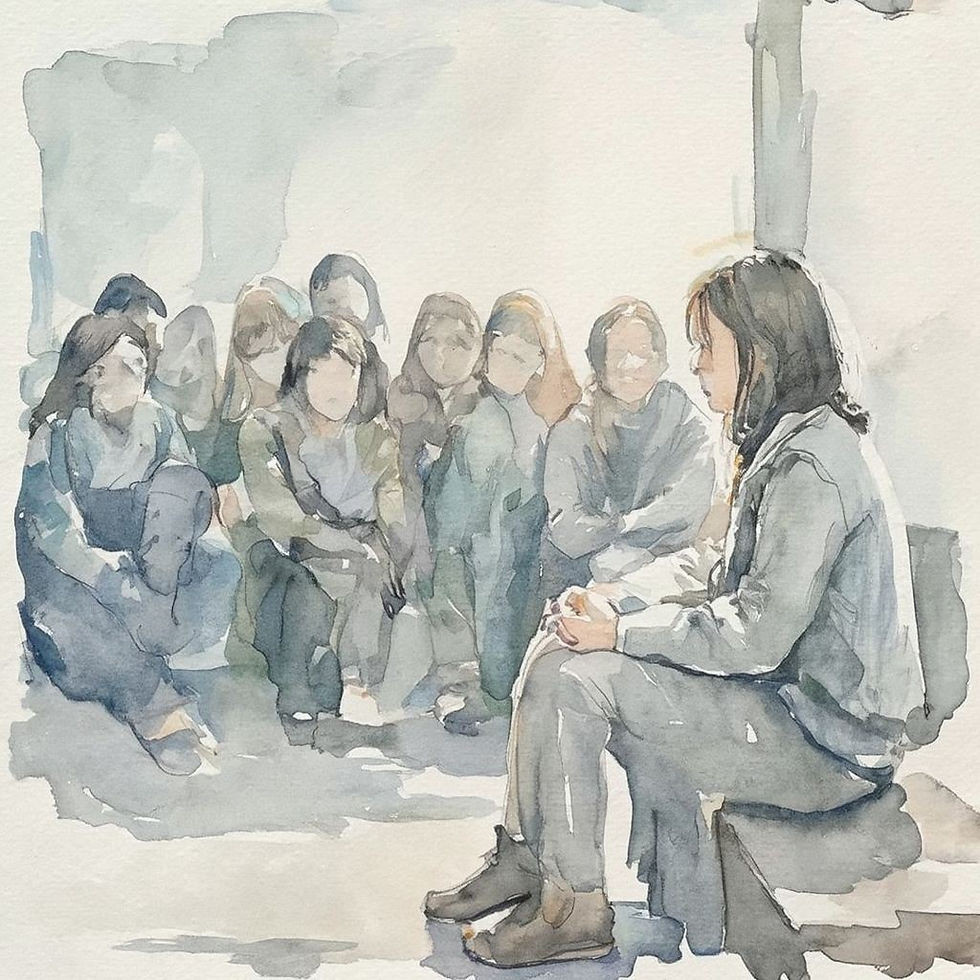
She sat at the edge of the group, close enough to hear, but not close enough to belong.
No one said she couldn’t join. No one had to.
Othering in the classroom rarely announces itself. It does not always come in the form of exclusionary language or overt bias. It lives in the subtle patterns. Who gets called on. Whose stories are reflected in the curriculum? Who is described as “those kids”? Who is constantly “supported” but rarely empowered?
Othering is not just about difference. It is about distance.
It creates a divide between “us” and “them,” often unintentionally, often invisibly. It is reinforced through language, expectations, grouping practices, curriculum choices, and even well-meaning interventions. It can happen when we simplify identities, when we generalize experiences, when we position some students as the norm and others as deviations from it.
In a classroom, this matters deeply.
Belonging is not a soft concept. It is a condition for learning. When students feel othered, they disengage, self-protect, or internalize messages about who they are allowed to be. When they feel seen, valued, and included, they take risks, express ideas, and grow.
The work is not just to avoid harm. It is to intentionally design for belonging.
Before we change systems, we have to confront our own lenses. This work begins with noticing what we have normalized.
Who do I call on most often, and why?
Whose voices dominate discussions in my classroom?
When I group students who consistently end up together, what message does that send?
Do my examples, texts, and materials reflect the lived experiences of all my students?
Where might I be using language that unintentionally creates distance, such as “those students,” “low kids,” or “ELLs” as a label rather than a strength?
How do I respond when a student’s perspective differs from the dominant narrative in the room?
Who gets positioned as capable, and who gets positioned as needing help?
When students struggle, do I scaffold toward independence or unintentionally reinforce dependence?
Do my classroom norms allow for multiple ways of thinking, speaking, and participating?
How do I ensure that students see themselves not just in the room, but in the learning itself?
Reflection is not about guilt. It is about awareness. Awareness creates the conditions for intentional change.
Change does not happen through intention alone. It happens through deliberate shifts in practice, language, and design.
Audit your language. Replace deficit-based phrases with asset-based language. Shift from “these kids can’t” to “these students are developing…”
Design for voice equity. Use structures that ensure all students have opportunities to contribute, such as think-pair-share, structured turn-taking, or written reflection before discussion.
Diversify your curriculum. Ensure that texts, examples, and perspectives reflect a range of cultures, identities, and experiences in meaningful ways, not as add-ons.
Rethink grouping practices. Move beyond static ability groups. Create flexible, purpose-driven groupings that shift based on task and need.
Elevate student identity. Invite students to share their experiences, languages, and perspectives as assets within the learning environment.
Examine participation patterns. Track who speaks, who is silent, and who is interrupted. Adjust intentionally.
Normalize multiple ways of demonstrating understanding. Provide varied entry points and outputs so students are not measured against a single dominant mode.
Interrupt bias in real time. When exclusionary comments or patterns emerge, address them directly and constructively. Silence reinforces othering.
Build collective norms of belonging. Co-create classroom agreements that explicitly value respect, listening, and inclusion.
Engage in ongoing reflection. Use student feedback, peer observations, and self-assessment to continually refine your practice.
These are not add-ons. They are the work.
Othering is not always loud. Often, it is quiet. Systemic. Embedded in routines, we have stopped questioning.
The responsibility of educators is not simply to teach content. It is to shape environments where every student can see themselves as part of the “we.” That requires more than kindness. It requires courage, reflection, and intentional design.
Every time a student feels like they are on the outside looking in, learning becomes secondary to survival.
Every time a student feels they belong, learning becomes possible in transformative ways.
The goal is not just inclusion. It is connection.
The work is not just about awareness. It is action.
The outcome is not just equity. It is humanity.
Let us build classrooms where no one has to wonder if they are part of the story.
Let us build classrooms where they know.

Comments